
The aircraft carrier USS Princeton was launching planes during the October 1944 Battle of Leyte Gulf when a bomb ended her career—and the lives of hundreds of men.

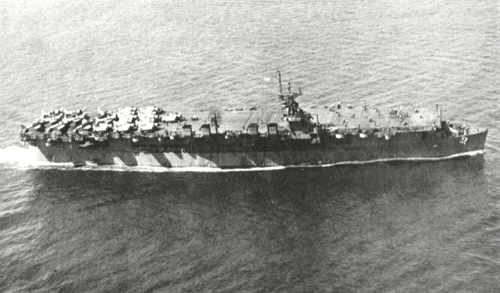
USS Princeton (CVL-23) was the fourth US Navy ship to bear the name, but unlike her predecessors, she carried a fleet of warplanes as her primary weaponry. Here, she slices through Caribbean waters in May 1943 on her shakedown cruise. (US Navy)

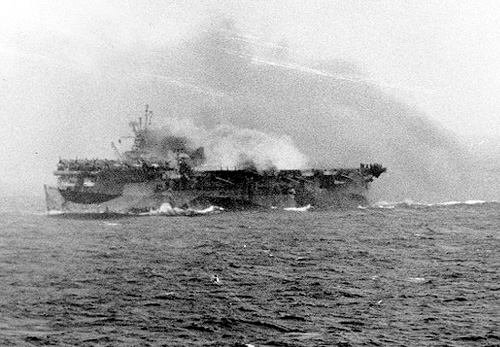
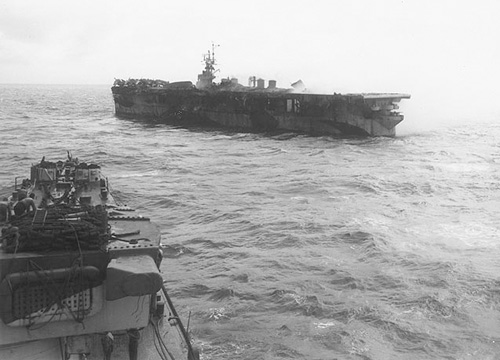
Princeton’s planes pounded Japanese warships on the morning of October 24, 1944, the first day of the Battle of Leyte Gulf off the Philippines’ east coast. But at 9:38 a.m., a land-based Japanese Judy dive bomber managed to drop a bomb on the American carrier. Here is Princeton limping along about 20 minutes later. (US Navy)

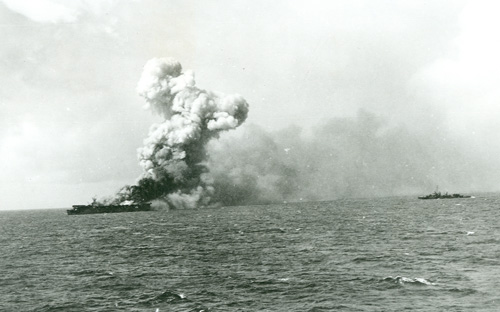
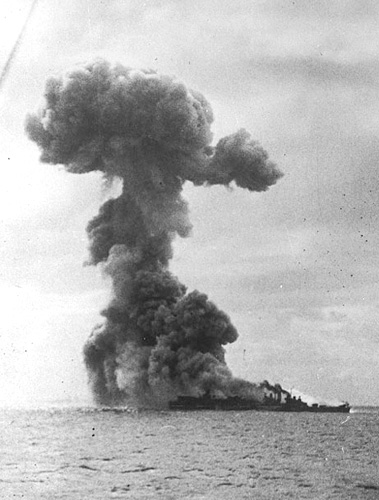
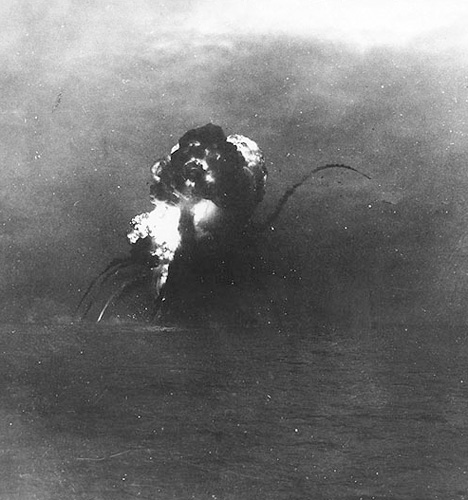
The 550-pound bomb crashed through Princeton’s flight deck between the elevators that lifted planes to and from the flight deck. Exploding on the hangar deck below, it started a fire that raged out of control when a sprinkler system malfunctioned. At 10:02 a.m., torpedoes on six Avenger aircraft exploded, causing devastation, more explosions, fires, and this enormous plume of smoke. (National Archives)

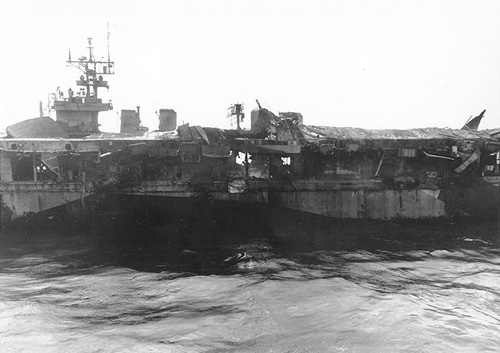
The massive explosion crumpled Princeton’s crumpled forward elevator and flight deck. (US Navy)

US ships hurried to protect and assist the wounded Princeton—the destroyers Irwin (DD-794) and Morrison (DD-560), the light cruiser Reno (CL-96), and the light cruiser Birmingham (CL-62), from which this photo was taken. (US Navy)

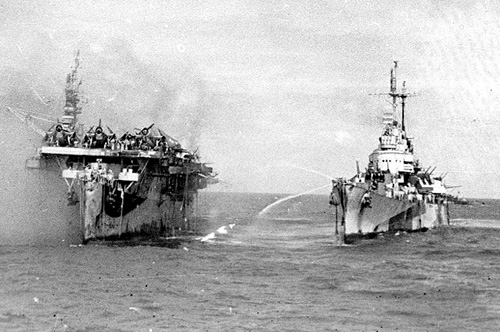
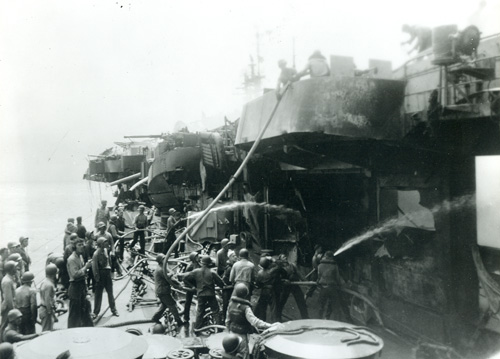
Most of Princeton’s crew was ordered to abandon ship, but a damage control team of about 240 men remained to fight the fires. Irwin and Morrison came alongside to help, but were battered dangerously against the big carrier. So, the larger Reno and Birmingham took up the job. This is Birmingham coming to the rescue. (US Navy)

Reno approaches to join the firefighting efforts. (US Navy)

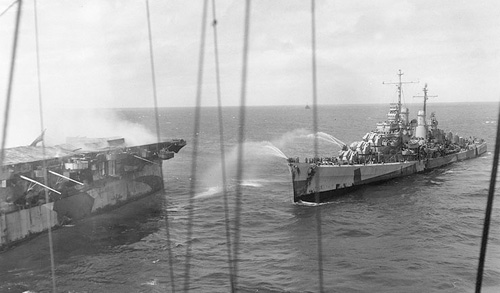
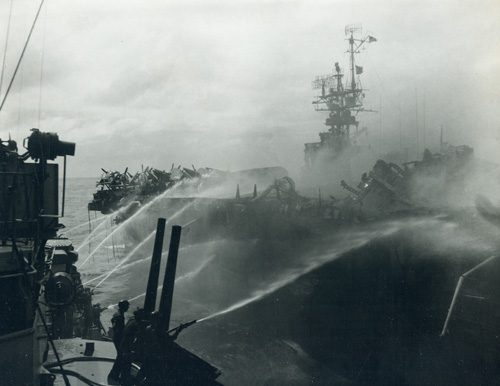
Smoke and steam rise from the Princeton as the Reno trains her hoses on the carrier’s starboard quarter. The Birmingham, barely visible, is spraying the carrier’s port side. (US Navy)

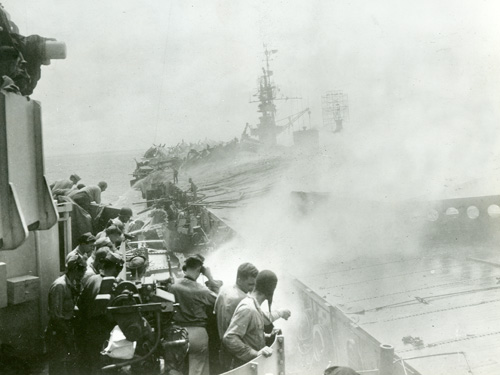
The Birmingham launches a steady broadside of water at the Princeton. Carrier planes, their wings folded, line the carrier’s forward deck. (National Archives)

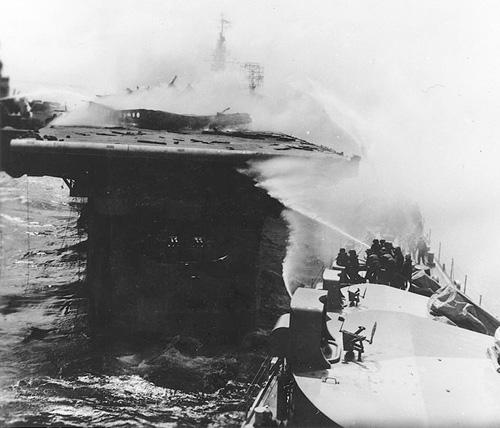
As the flames begin to die down, Birmingham comes closer alongside Princeton, whose smoldering deck is strewn with fire hoses. (National Archives)

Looks, words, and lines pass between the Birmingham and the towering Princeton. Parked Avenger torpedo bombers are visible on the carrier’s deck. (National Archives)

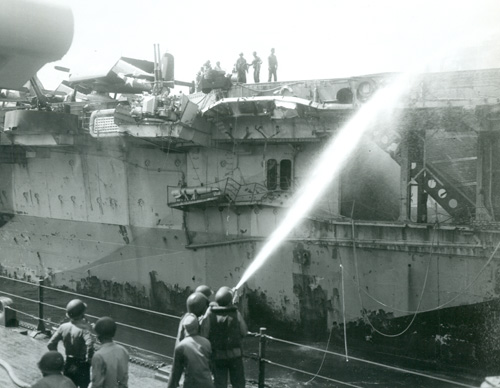
Birmingham (seen here) and Reno continued pouring water into Princeton. (National Archives)

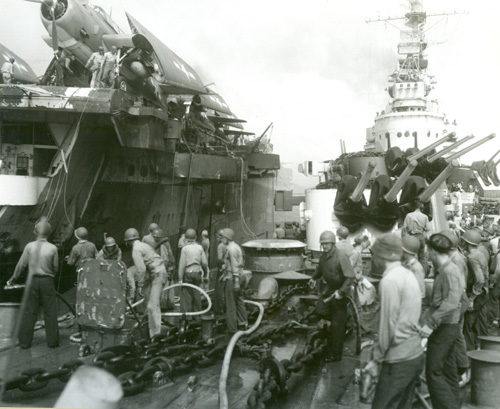
Soon, Birmingham was tight against the Princeton. Men and hoses passed from the cruiser onto the carrier. (National Archives)

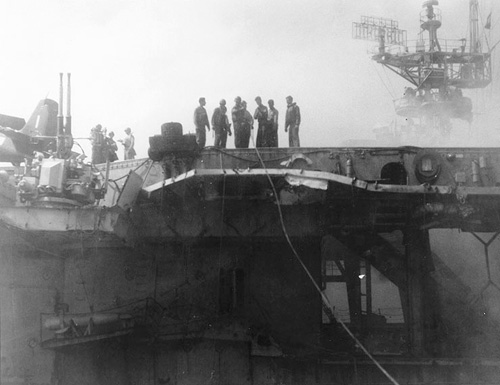
Damage control men confer on Princeton’s forward flight deck, near where the bomb struck, to determine what actions need to be taken next. (US Navy)

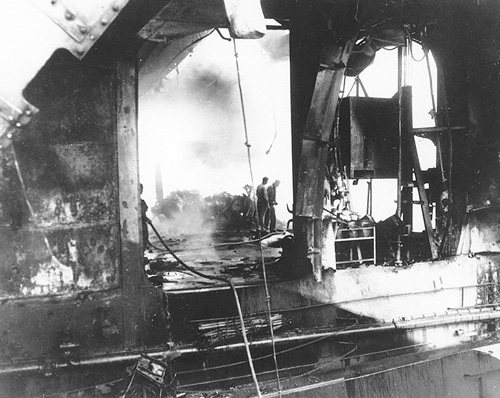
With the fire seemingly under control, damage control men inspect Princeton’s hangar deck, where an Avenger dive bomber lies in charred ruins. (US Navy)

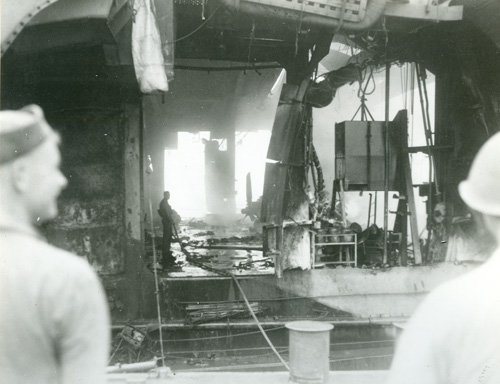
Sailors aboard the Birmingham look into the Princeton’s hangar deck. (National Archives)

After 1 p.m., word came that Japanese ships were approaching. Birmingham, Reno, and the destroyers withdrew. Soon, Princeton was again engulfed in flames. The two cruisers returned about two hours later. But at 3:23 p.m., the fires set off a cache of bombs, and Princeton exploded with Birmingham close alongside. (US Navy)

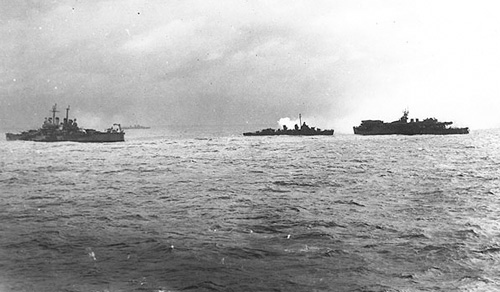
Reno (far left) and the badly damaged Birmingham (center, smoking from the blast) back away from the Princeton. The carrier’s stern was blown off, along with part of her superstructure. Hundreds of men died—more than 200 aboard Birmingham alone. (US Navy)

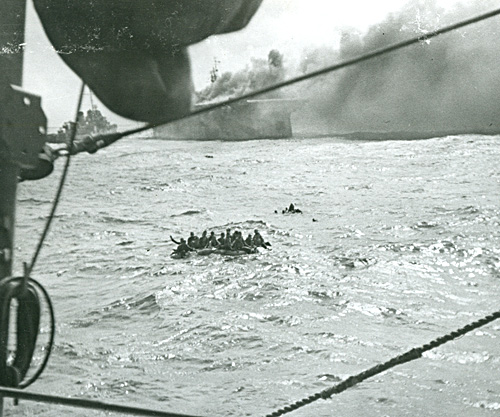
The men who had been ordered to abandon the Princeton after the bomb strike had been spared from a horrible death. Here, a group of them approach the destroyer USS Cassin Young (DD-793), their carrier burning behind them. (National Archives)

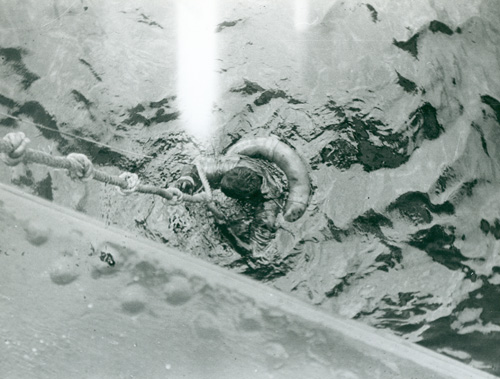
A Princeton survivor is pulled out of oil-slicked water by the Cassin Young. (National Archives)

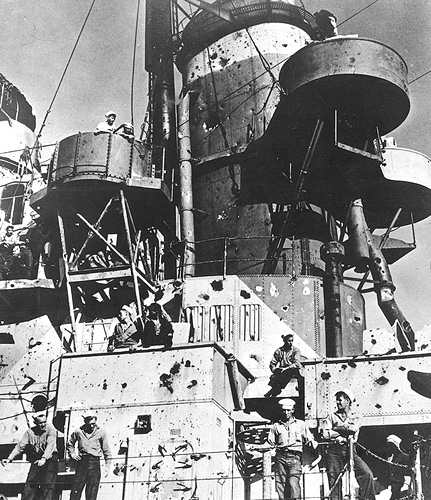
The Birmingham managed to survive Princeton’s explosion, but the cruiser bore scars. Her stack and superstructure, peppered by fragments of the Princeton, were punched full of holes. (US Navy)

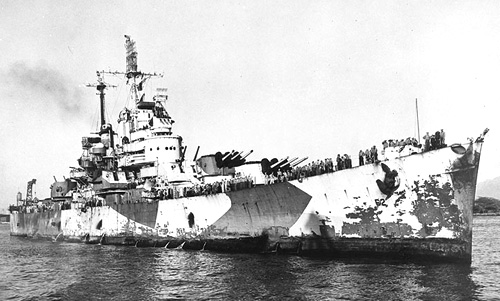
The scorched, pocked Birmingham arrives at Mare Island Navy Yard in California for repairs. She will remain in the yard into January 1945, then return to the Pacific theater to join in the battles of Iwo Jima and Okinawa. (US Navy)

For the Princeton, there would be no recovery. Here, the once mighty carrier goes up in a fireball after being torpedoed by Reno. Princeton sank soon afterward. (US Navy)