
Clearing ash-coated Iwo Jima of its grim Japanese defenders was a grind unlike anything US marines had ever experienced before.
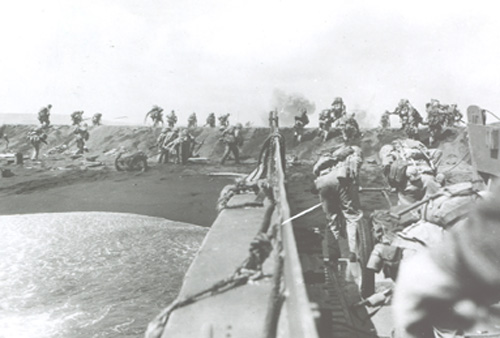
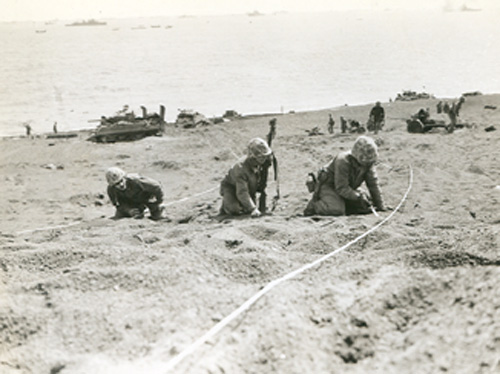
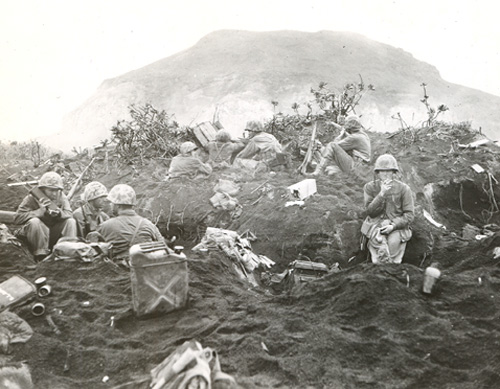
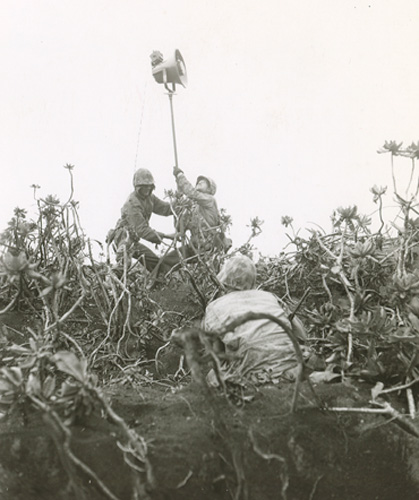
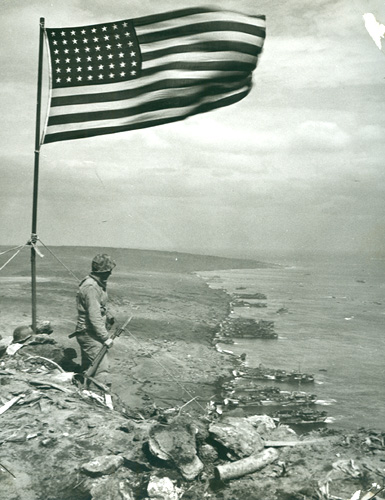
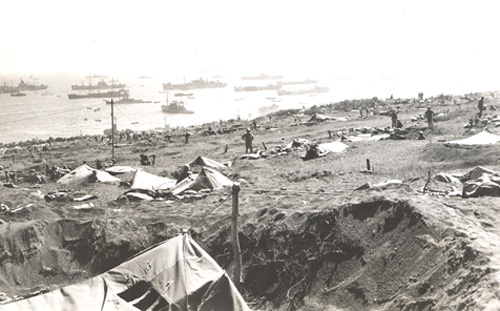
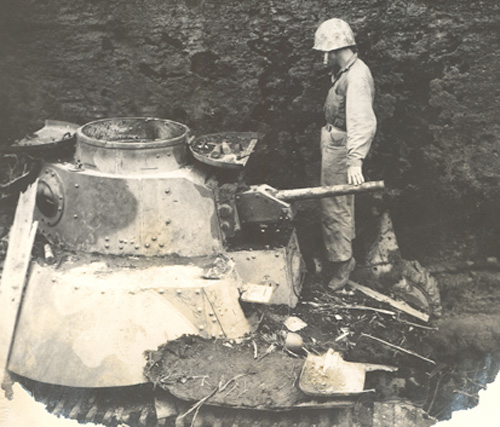
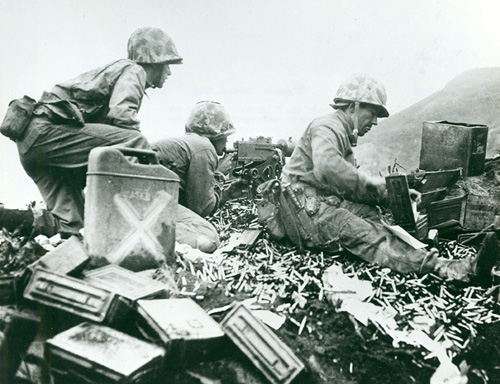
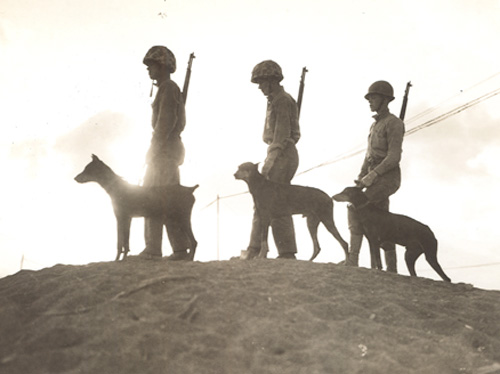
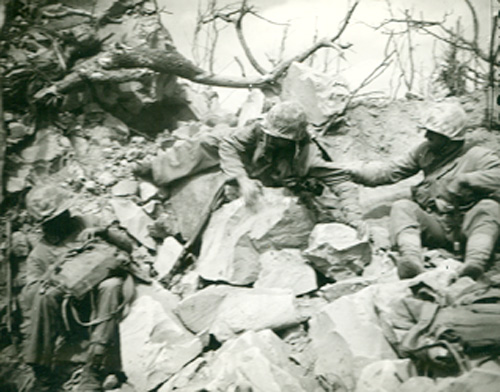
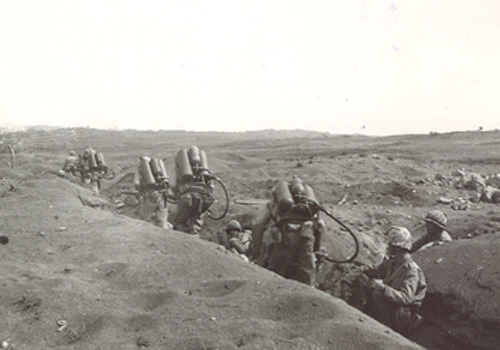
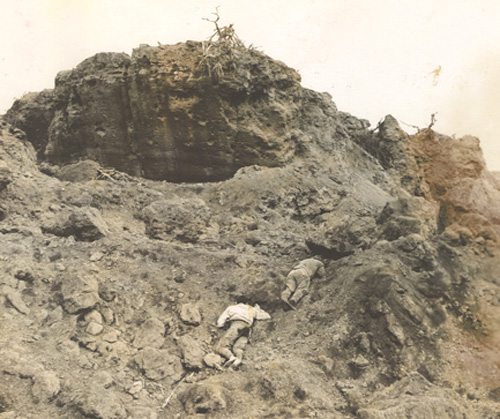
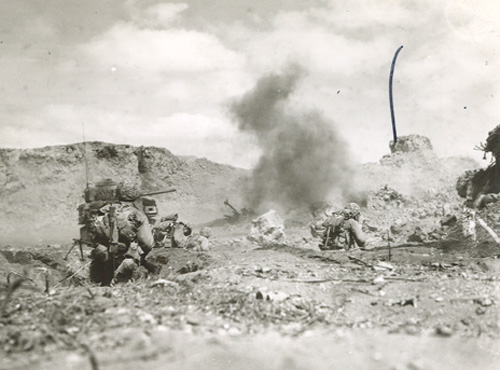
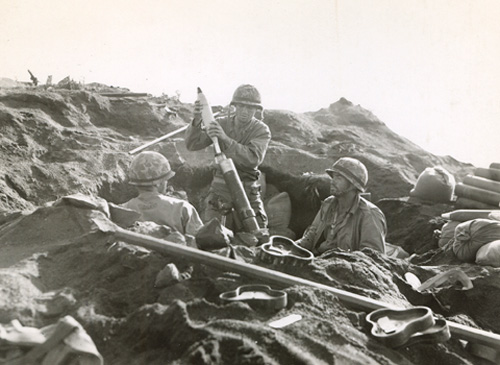
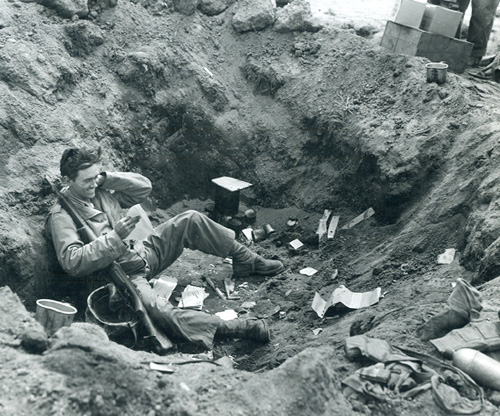
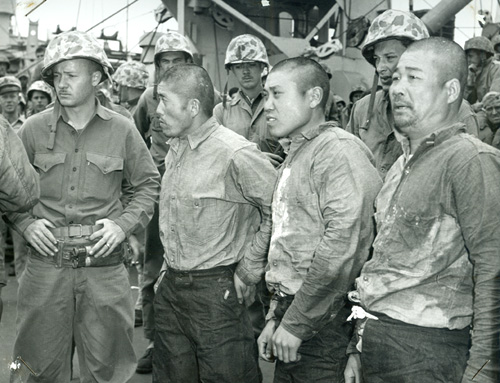
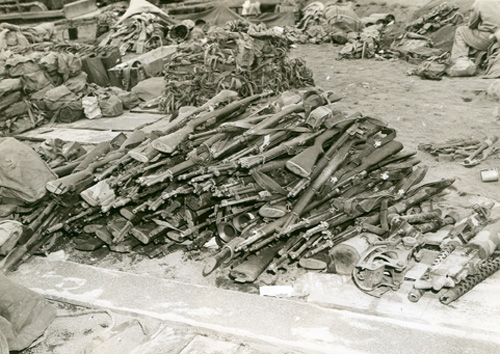
Marines pour out of landing craft and onto Iwo Jima on February 19, 1945, D-day for the island’s invasion. (National Archives) Wielding their K-Bar knives, marines probe the shoreline for Japanese-laid mines. (National Archives) Exhausted leathernecks pause for a breather below Japanese positions on imposing Mt. Suribachi. (National Archives) Three days into the invasion, marines employ a sound system in an effort to talk Japanese soldiers out of caves around Mt. Suribachi. (National Archives) By February 23, 1945, marines had planted the American flag atop Mt. Suribachi, and navy and coast guard ships were pouring more men and supplies onto the island’s beaches. (National Archives) But the battle was far from won. It had scarcely begun. Six days into the invasion, the marines’ beachhead remained a clutter of men and tents. (National Archives) A marine inspects the wreckage of a Japanese light tank destroyed on Hill 382. (National Archives) Seated in a pool of shell casings, marine machine-gunners target Japanese defenders hidden along the island’s Airfield Number 2. (National Archives) Aided by enemy-sniffing “devil dogs,” a 3rd Marine Division security detail sets out on a patrol. (National Archives) Struck in the face by a sniper’s bullet, a platoon leader reels from an improvised marine observation post. (National Archives) Led by a single rifleman, flamethrower-toting marines of the 5th Division struggle forward to smoke out a nest of Japanese pillboxes. (National Archives) Japanese corpses litter the slopes of bitterly contested Hill 382. (National Archives) Supported by a tank, marines brave exploding enemy mortar shells to storm Japanese dugouts on Iwo Jima’s rocky northern half. (National Archives) Dug in above Airfield Number 2, mortar men of the 21st Marine Regiment’s 3rd Battalion go to work. (National Archives) Taking advantage of a lull in the fighting, a marine enjoys a fresh stack of mail. (National Archives) Japanese POWs ponder their fate aboard a US Navy transport. Few of Iwo Jima’s 21,000 Japanese defenders lived to be captured. (National Archives) The five-week campaign for Iwo Jima took its toll on US marines, as this stack of ownerless weapons suggests. (National Archives) ![]()

![]()

![]()

![]()

![]()

![]()

![]()

![]()

![]()

![]()

![]()

![]()

![]()

![]()

![]()

![]()

![]()